Hardware · Software · Stanford CHARM Lab
XR Microscope
augmented reality for low-cost education
June - Sept 2025
the full project deck
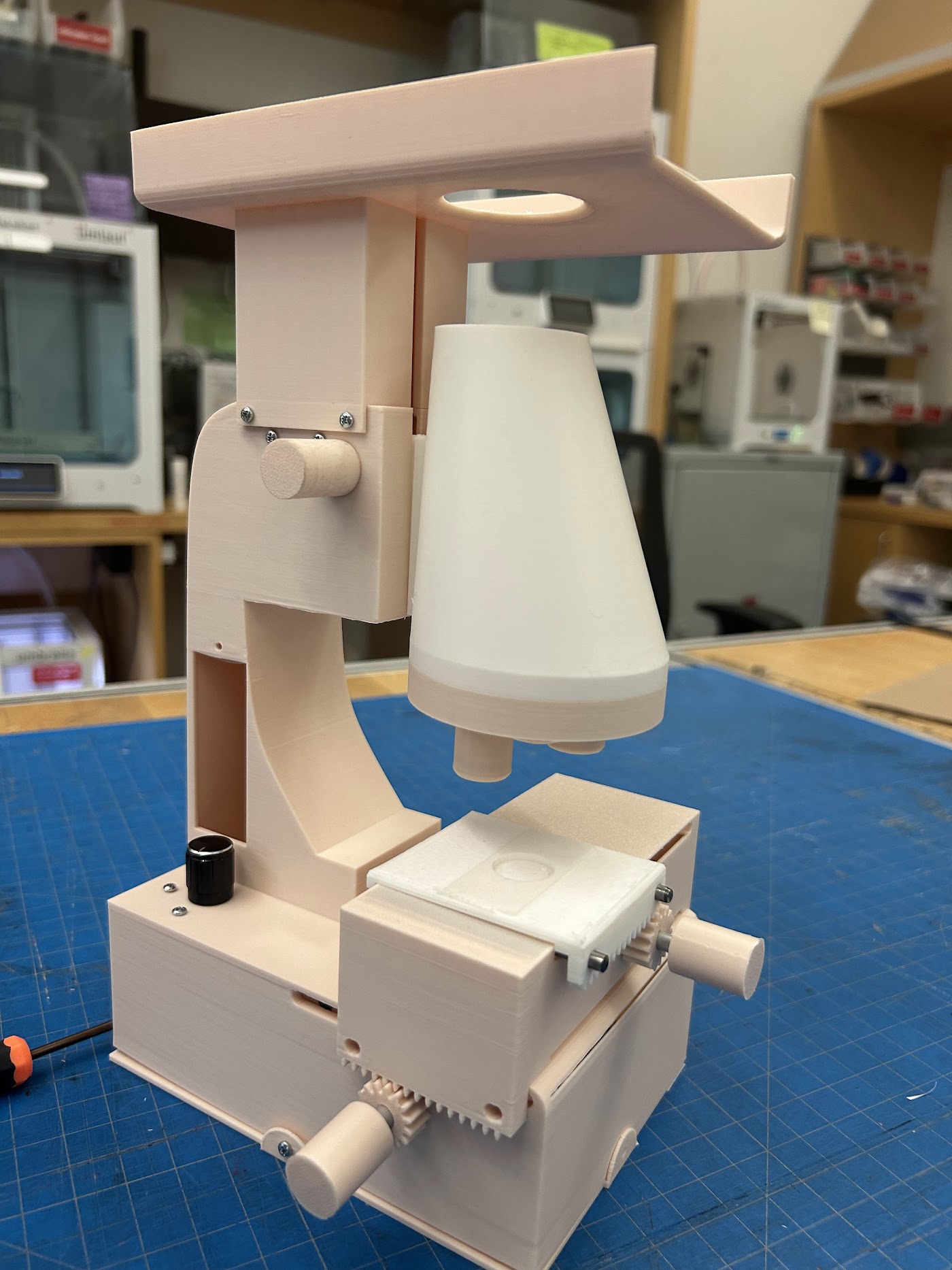
At Stanford’s CHARM Lab, I designed and fabricated an extended reality microscope: a low-cost, fully 3D-printed physical microscope connected to an interactive Unity iOS app. The goal was to make microscopy education more tangible and accessible by letting students physically manipulate microscope controls while receiving guided digital feedback, tutorials, and interactive learning activities.
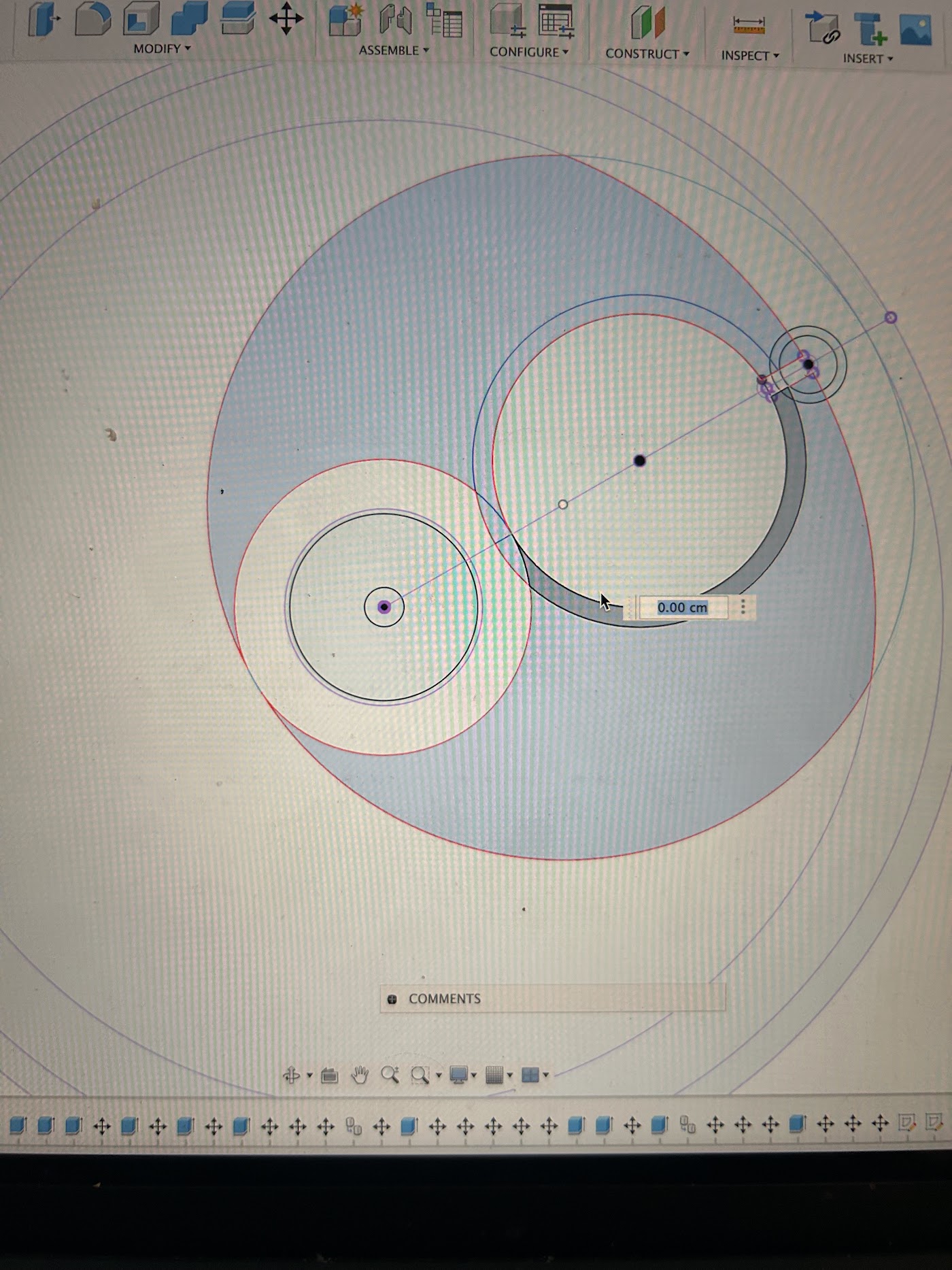
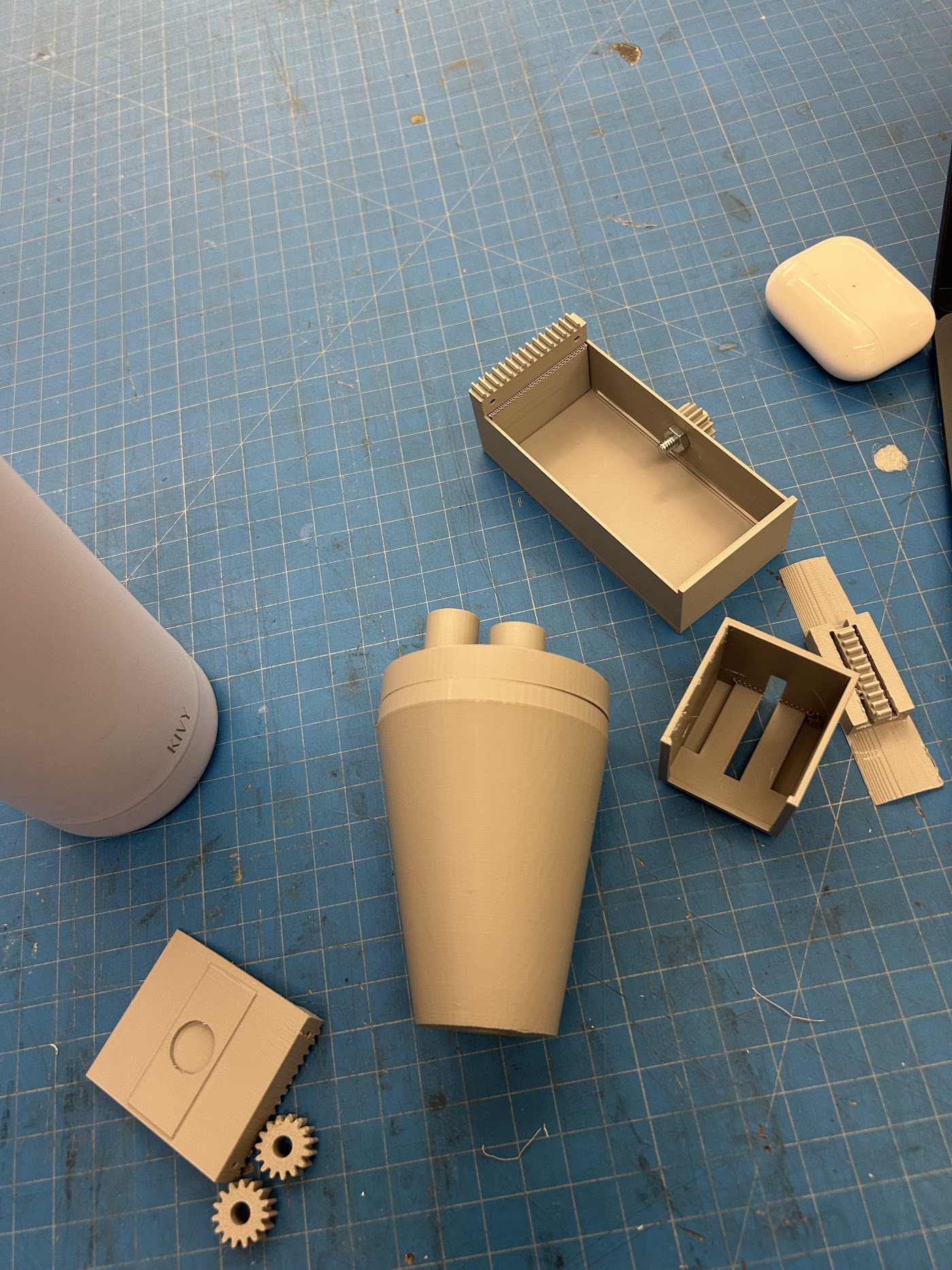
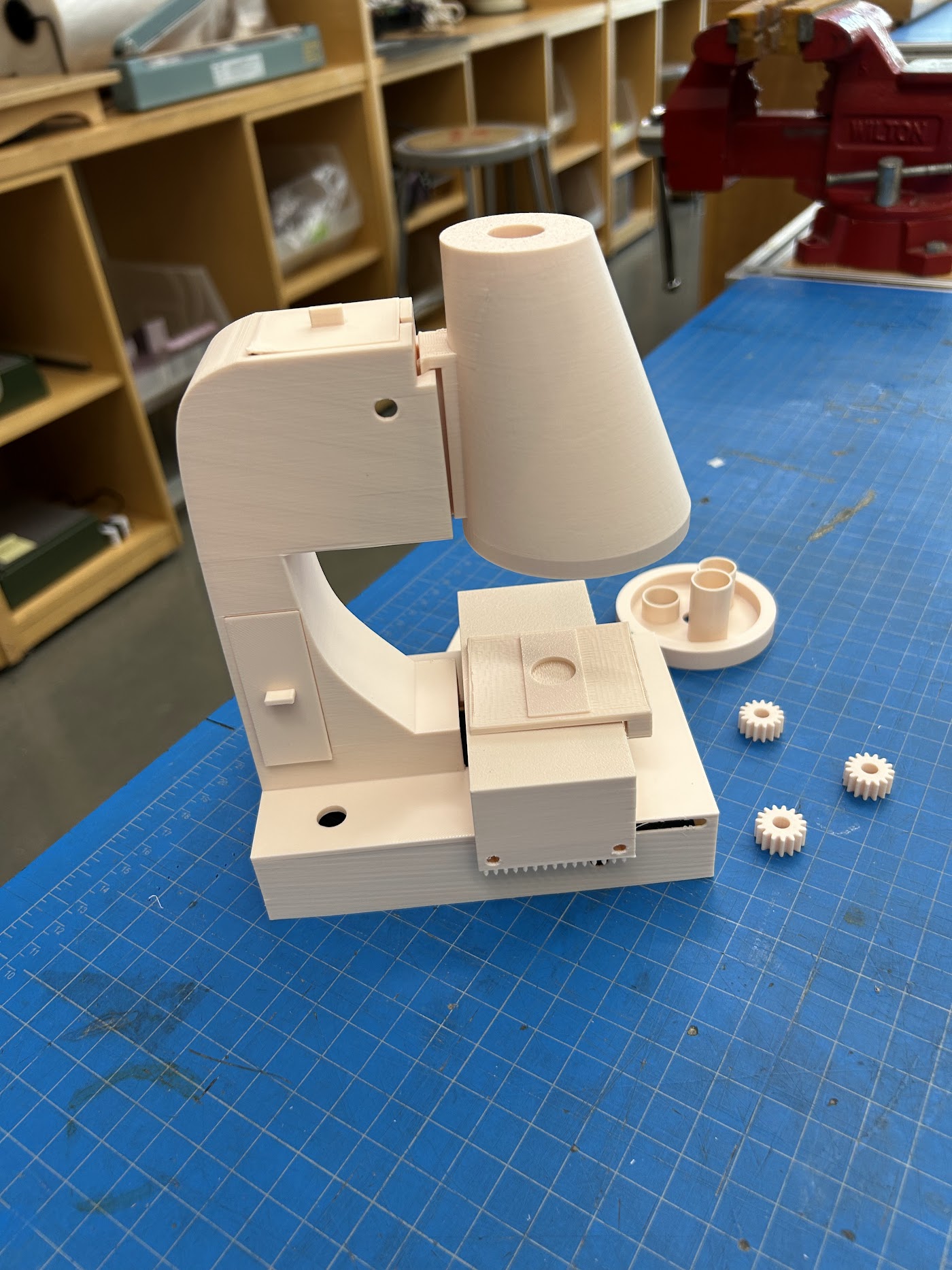
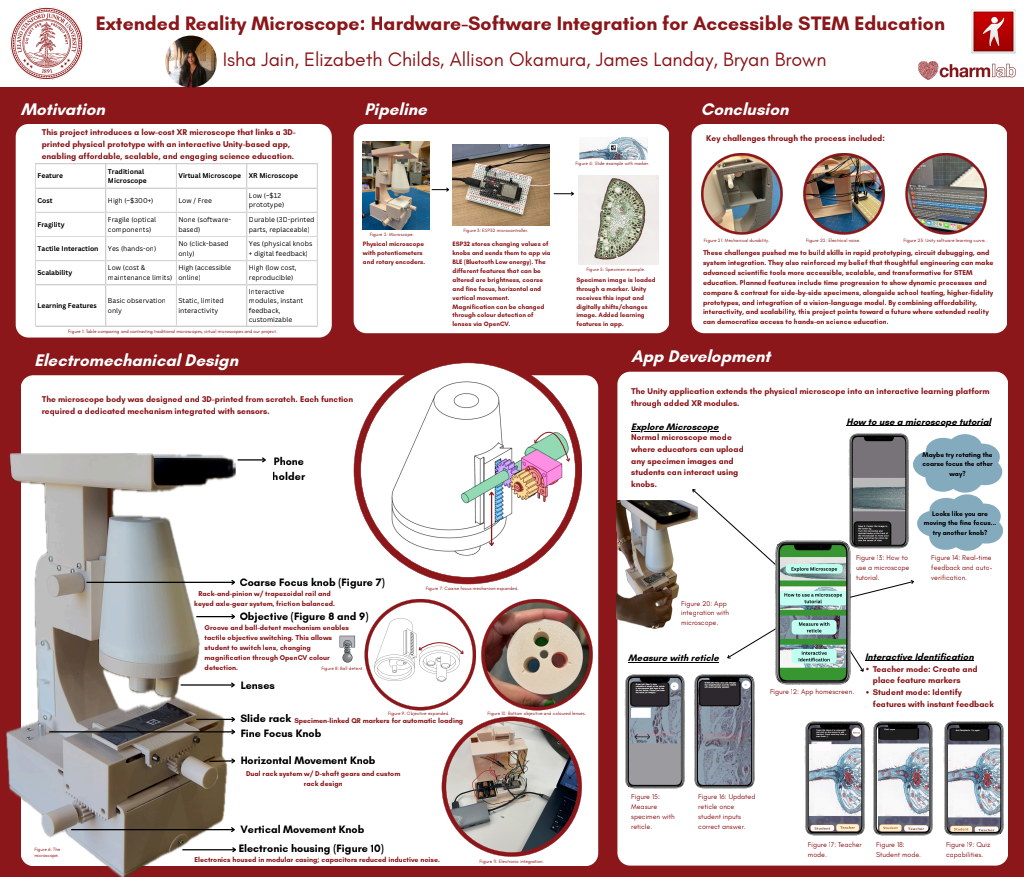
I designed and fabricated the entire microscope in Fusion 360, marking my first time ever using 3D printing. The mechanical design translated the familiar controls of a real microscope into a low-cost educational prototype: an XY translation stage for moving the slide horizontally and vertically, a focusing mechanism for adjusting the objective’s position, and a ball detent click mechanism for switching between magnification levels using colored acrylic lenses. Through repeated CAD and print iterations, I learned how small design details, like tolerances, friction, alignment, gear ratios, part thickness, and assembly order, determine whether a prototype feels intuitive, sturdy, and usable.
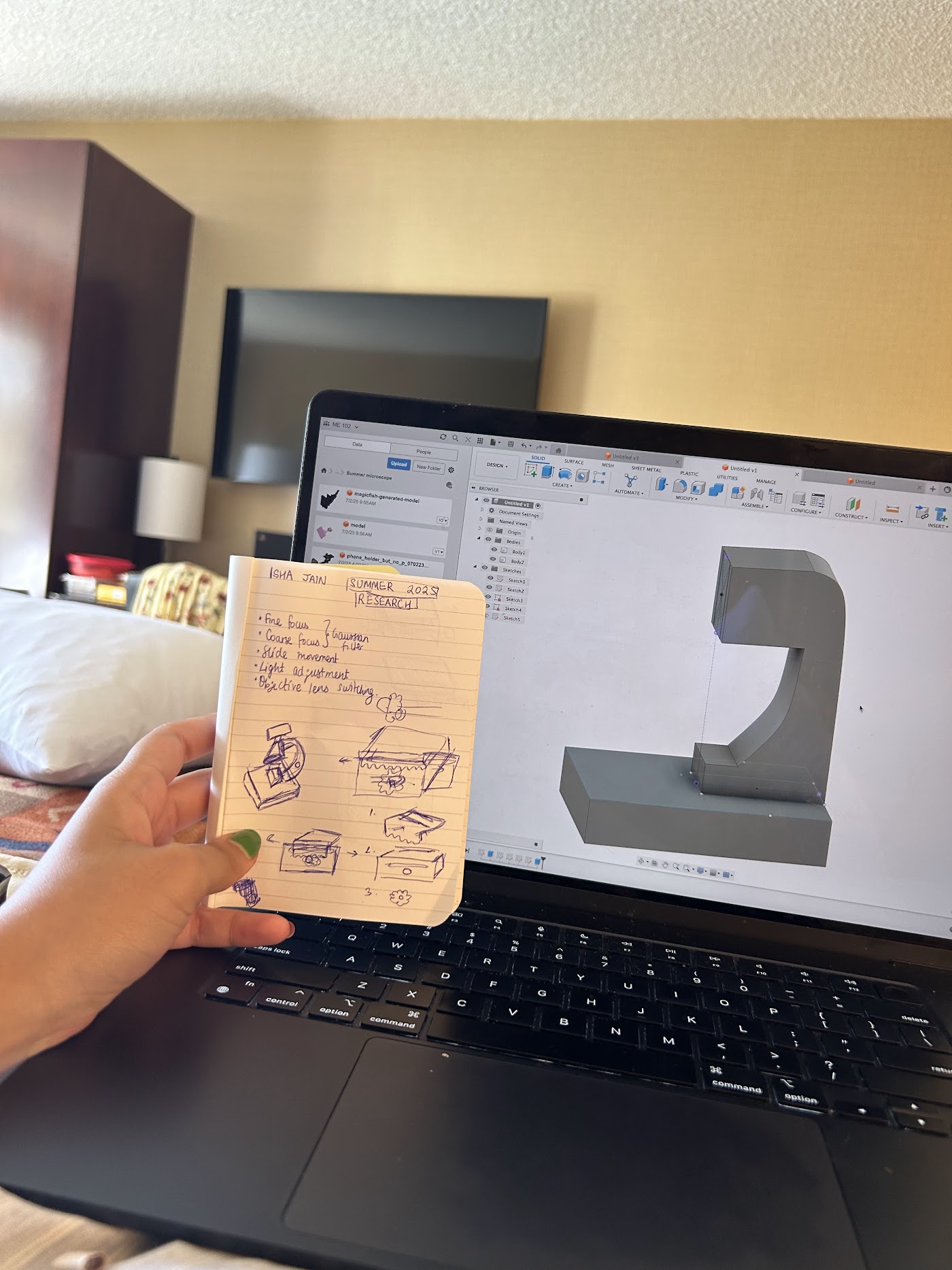
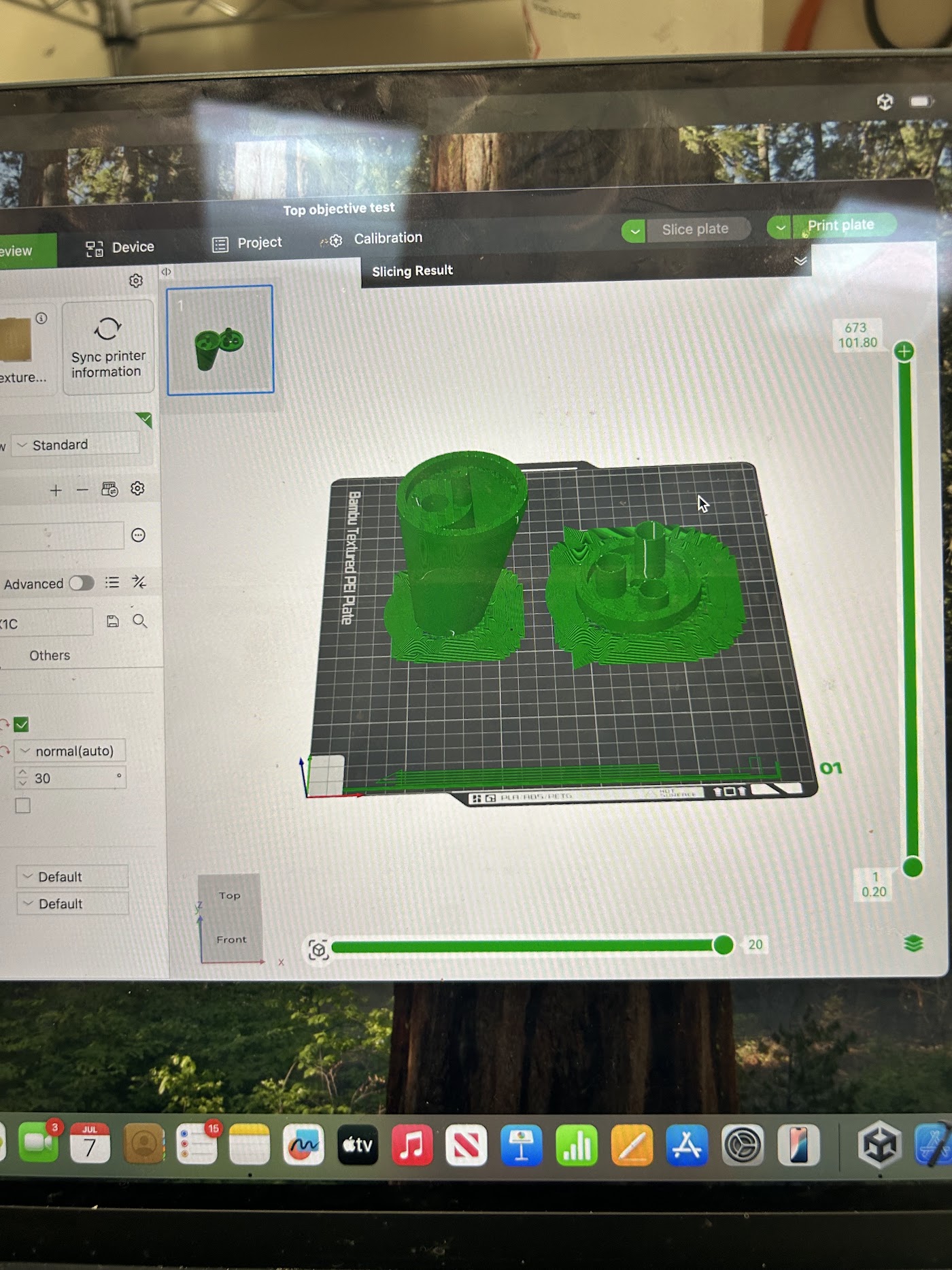
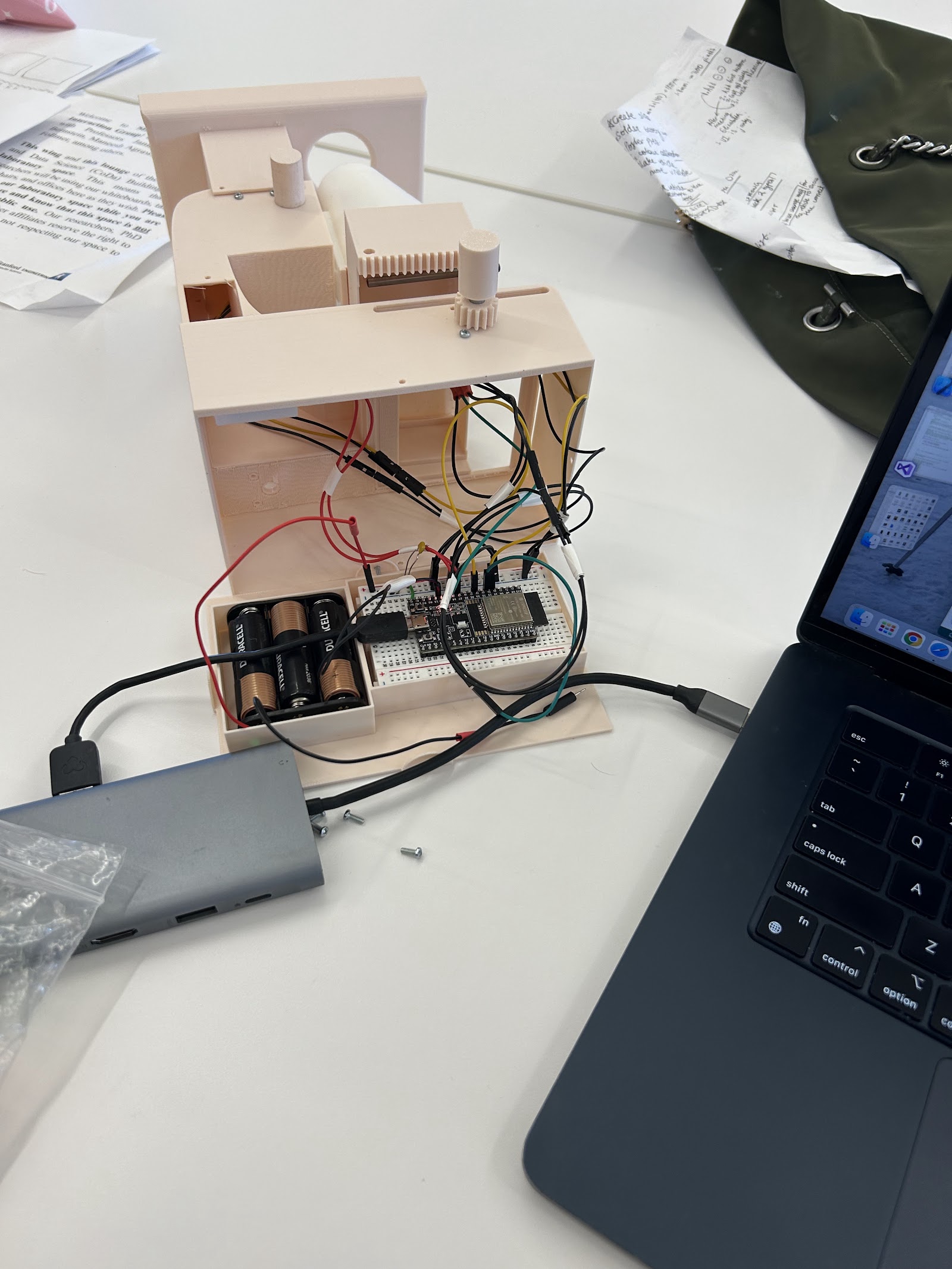
To connect the physical microscope to the app, I integrated an ESP32 microcontroller with potentiometers and rotary encoders embedded into the microscope controls. These sensors tracked user interactions such as stage movement, coarse and fine focus, aperture adjustment, and magnification changes. I programmed the ESP32 in Arduino-flavored C/C++ and used Bluetooth Low Energy to stream live control values into Unity, allowing the app to respond in real time as students manipulated the microscope.
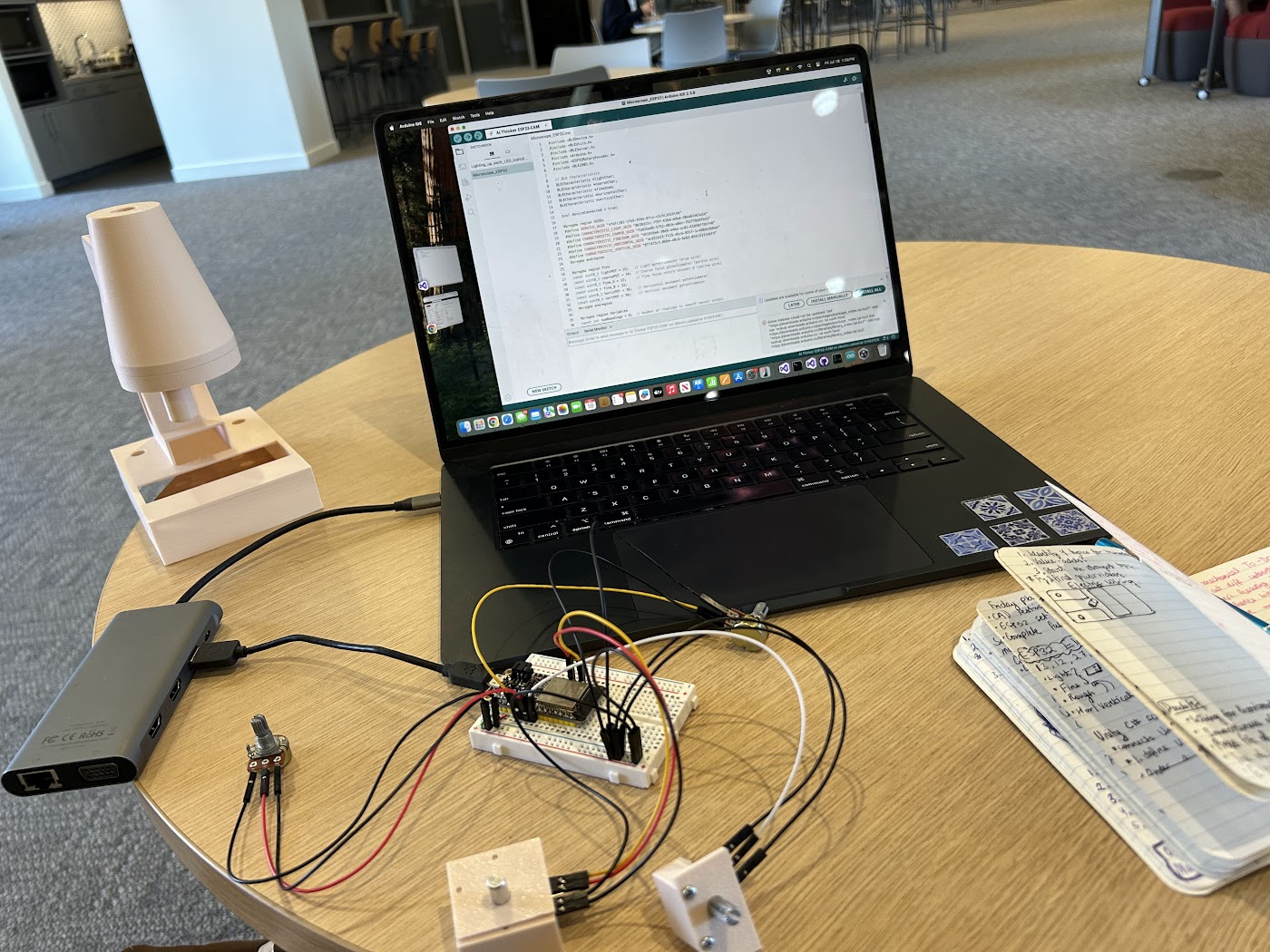
In Unity, I built interactive educational features including a microscope-use tutorial, real-time control feedback, reticle calibration and measurement, a mitosis progression slider, and an identification activity for finding structures in microscope images. I also integrated computer vision features using ArUco markers and image processing to help connect the physical microscope state to the digital learning experience.
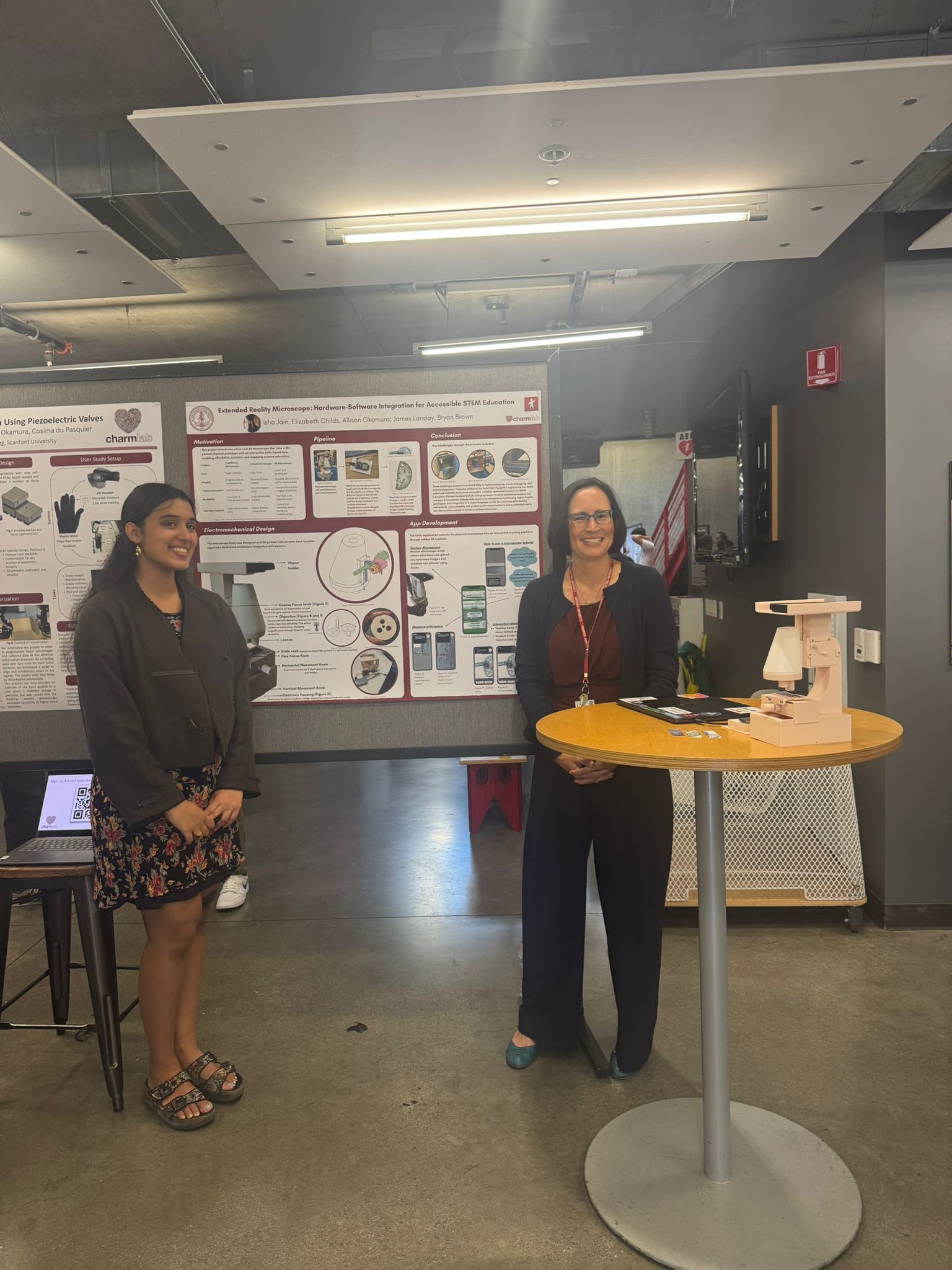
A major part of the summer was working with educators to understand how the microscope could function not just as a prototype, but as a learning tool. The system is now being tested in schools as a low-cost way to teach microscopy concepts, scientific observation, and measurement. This made the project especially meaningful to me: the technical decisions were always tied to questions of access, classroom usability, and how students actually learn through hands-on exploration.
Because this was my first time working with 3D printing, Unity, Arduino, ESP32 development, and Bluetooth communication, the project became an intensive lesson in learning by building. I debugged across mechanical tolerances, sensor noise, rotary encoder readings, BLE communication, iOS deployment, and user interaction design. By the end, I had built a working hardware-software educational tool and gained a much deeper appreciation for tangible interfaces: when students can turn a knob, move a slide, change magnification, and immediately see the effect, scientific tools become less abstract and more magical.
The XR microscope deepened my interest in frugal science and educational technology: building low-cost tools that let more people physically explore and understand the world.