Design & Impact · Design for Extreme Affordability · Uvita, Costa Rica
Design for Costa Rica Coral Restoration
tour guide training and youth programs for coral restoration in Uvita
Jan - June 2025
our project, in motion
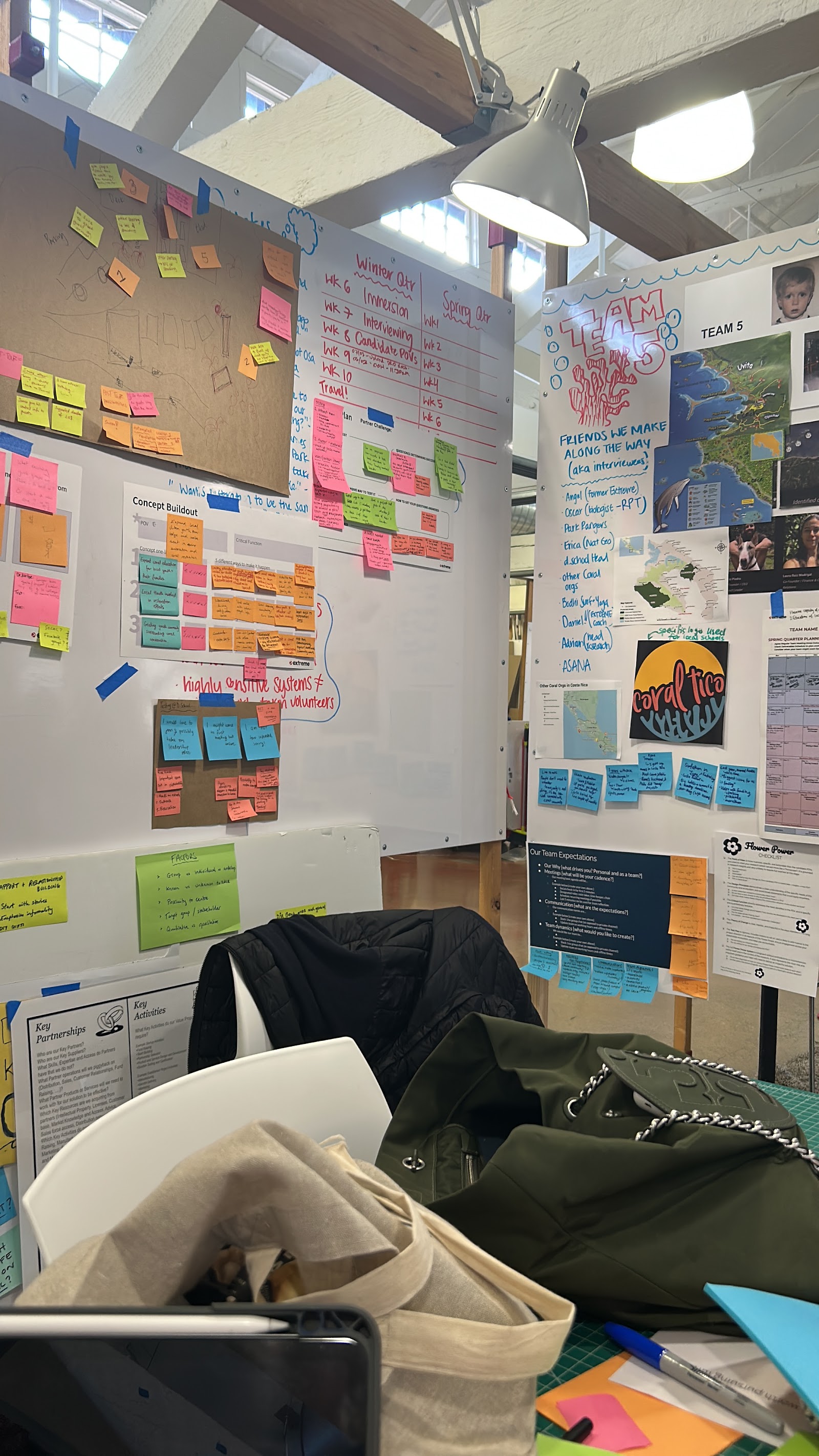
As part of Stanford’s Design for Extreme Affordability, I worked with two teammates in partnership with Costa Rica Coral Restoration (CRCR) in Uvita to design community-centered programs around coral restoration. Our project began with the understanding that reef conservation cannot be separated from the people who live closest to the reef. As one person told us, “Beach is one thing, ocean is another,” a reminder that even in a coastal community, environmental awareness does not always extend beneath the surface of the sea.
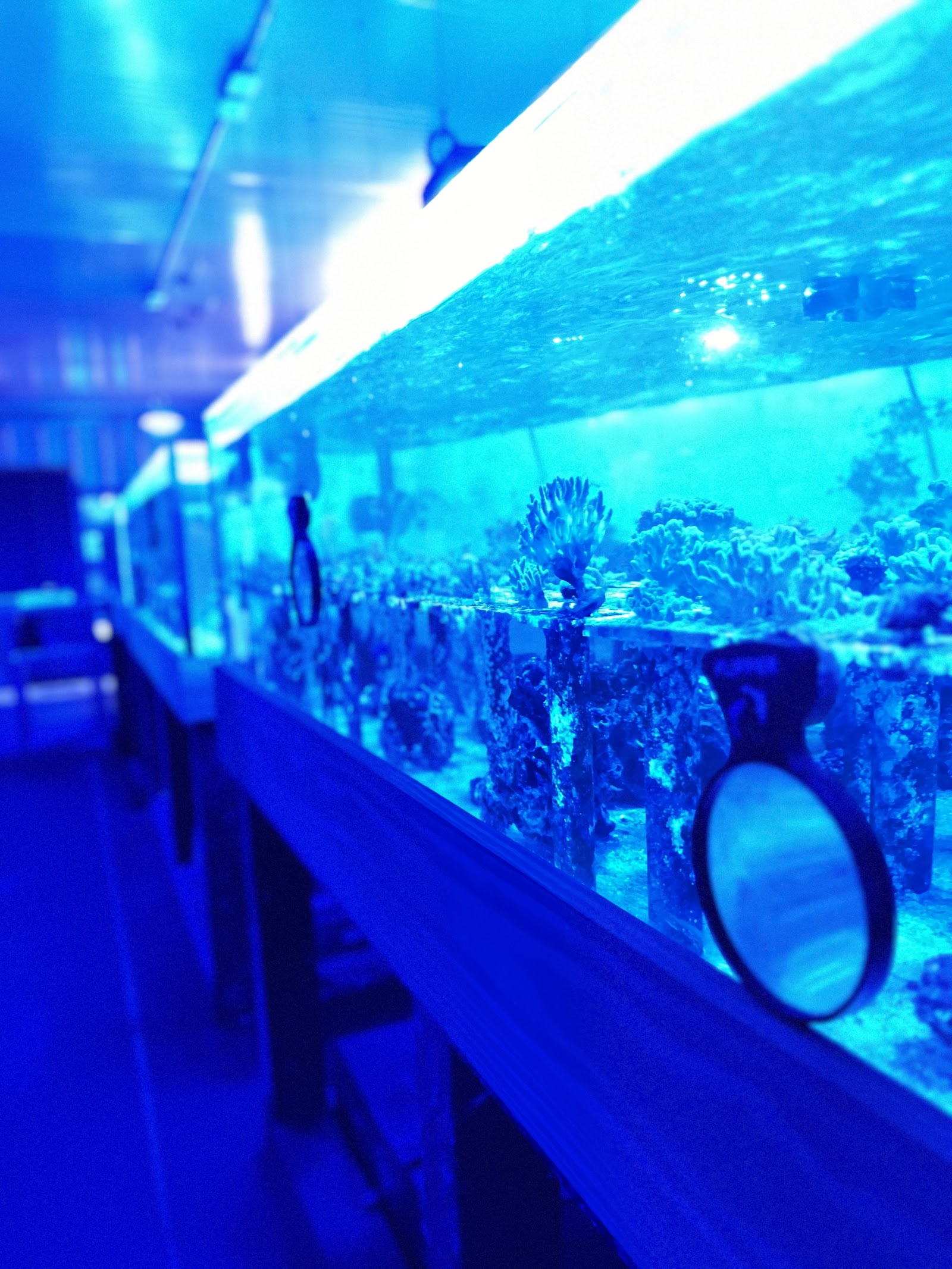

Our team had the opportunity to travel to Uvita, Costa Rica, where we worked directly with the CRCR team, local tour guides, women divers, students, educators, and community members. Through interviews, site visits, and co-design conversations, we learned that CRCR was already deeply rooted in the community, but faced a two-axis challenge: educational outreach was often one-off, and local community members had limited structured ways to stay involved in the ongoing work of the lab. One quote became central to our project: “If we can’t get community behind us, there is really no point to doing this.”
How can we inspire and advocate for the local community in Uvita, especially young people between 16 and 22, to get interested and experienced in coral restoration?
Coral Chicas
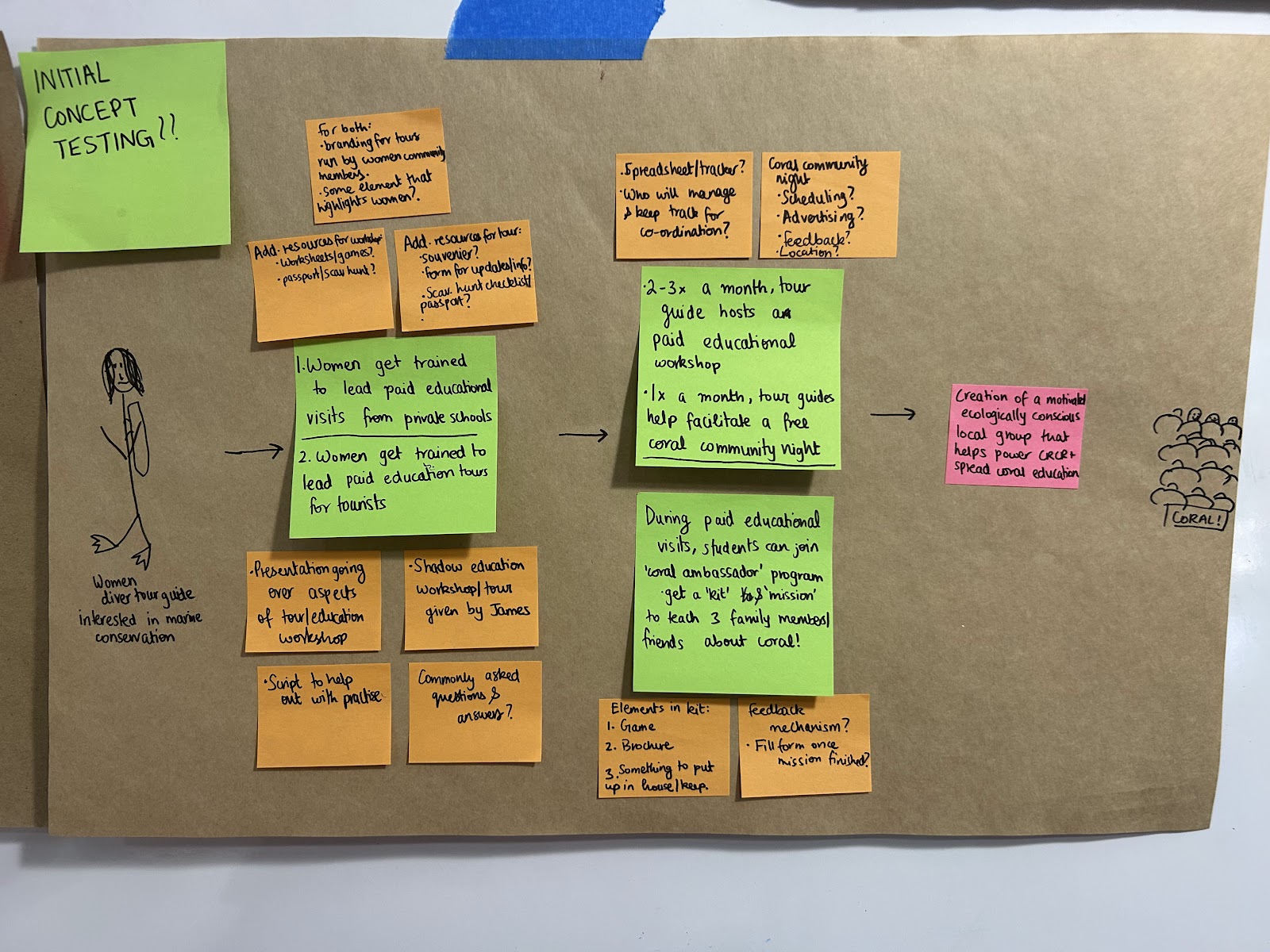
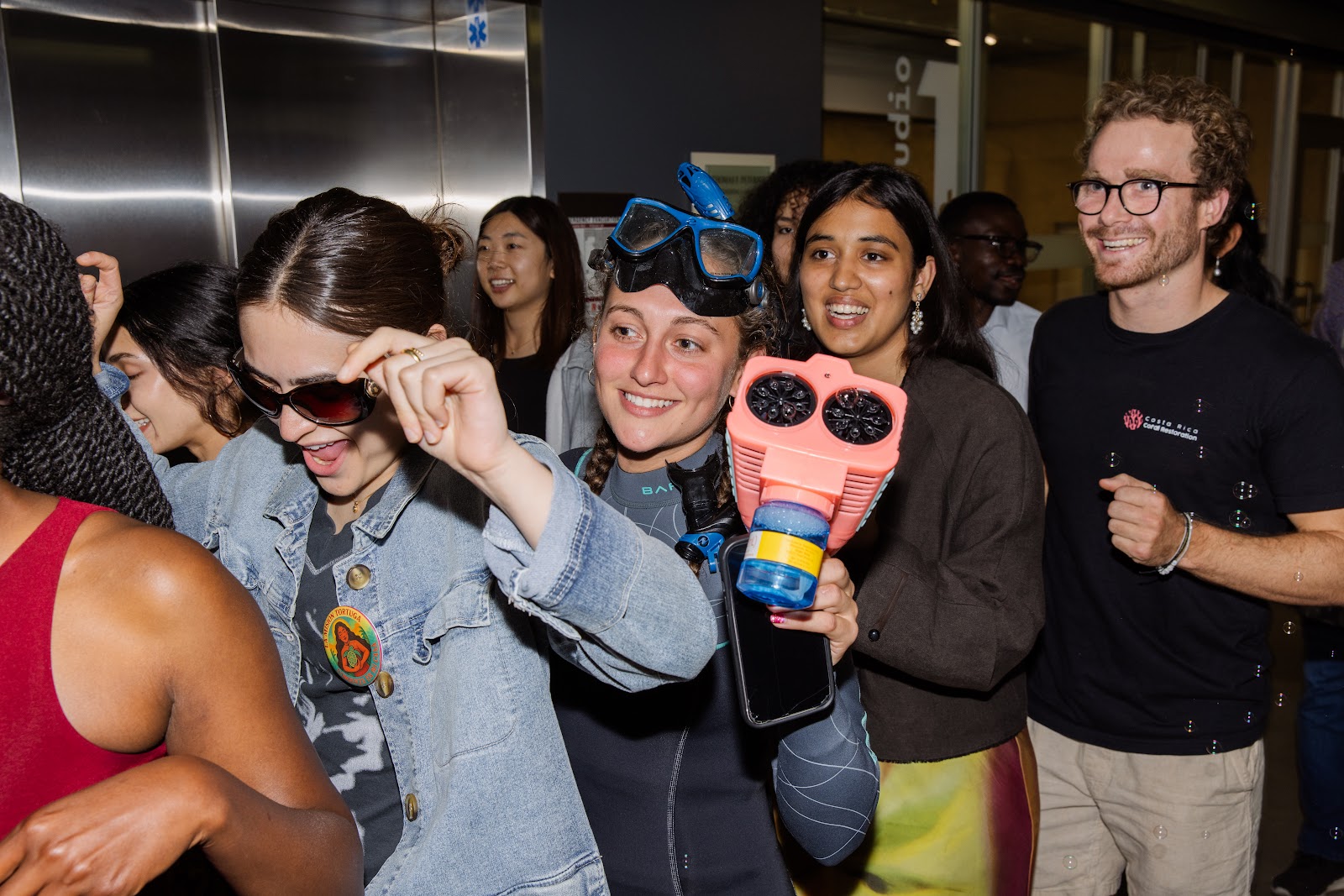
From this research, we developed a two-phase solution. The first was Coral Chicas, a program to train local women divers to become paid coral restoration tour guides at the CRCR lab. This created an income-generating opportunity while also spotlighting women divers as agents of change: people with lived experience of the ocean, ties to the local community, and the ability to make coral restoration feel personal. We prototyped training materials, tour scripts, station maps, shadowing sequences, and “Fact, Fun, You” cards to help guides balance required scientific content with their own stories and personalities.
Coral Tico Club
The second phase was Coral Tico Club, a youth program designed to give local teenagers repeated, hands-on ways to engage with coral restoration. Instead of a one-time workshop, the club included activities like coral monitoring, water testing, science folders, progress tracking, and reflection materials. In testing, students expressed strong interest in learning about coral identification, coral cutting, coral cultivation, water monitoring, and ocean education. We also developed the idea of Coral Ambassadors: young leaders who could help organize sessions, communicate with scientists, and represent the club within the community.
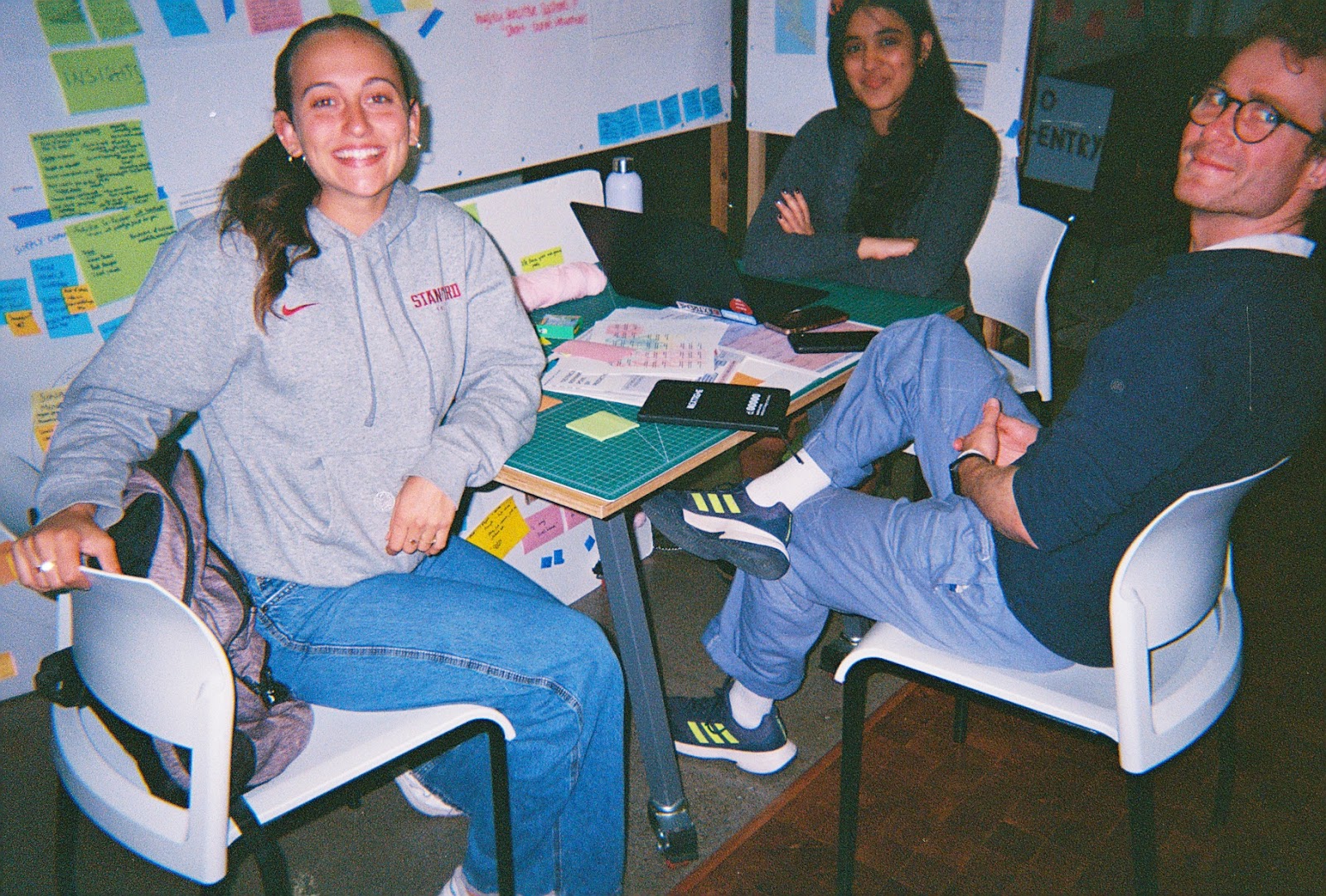
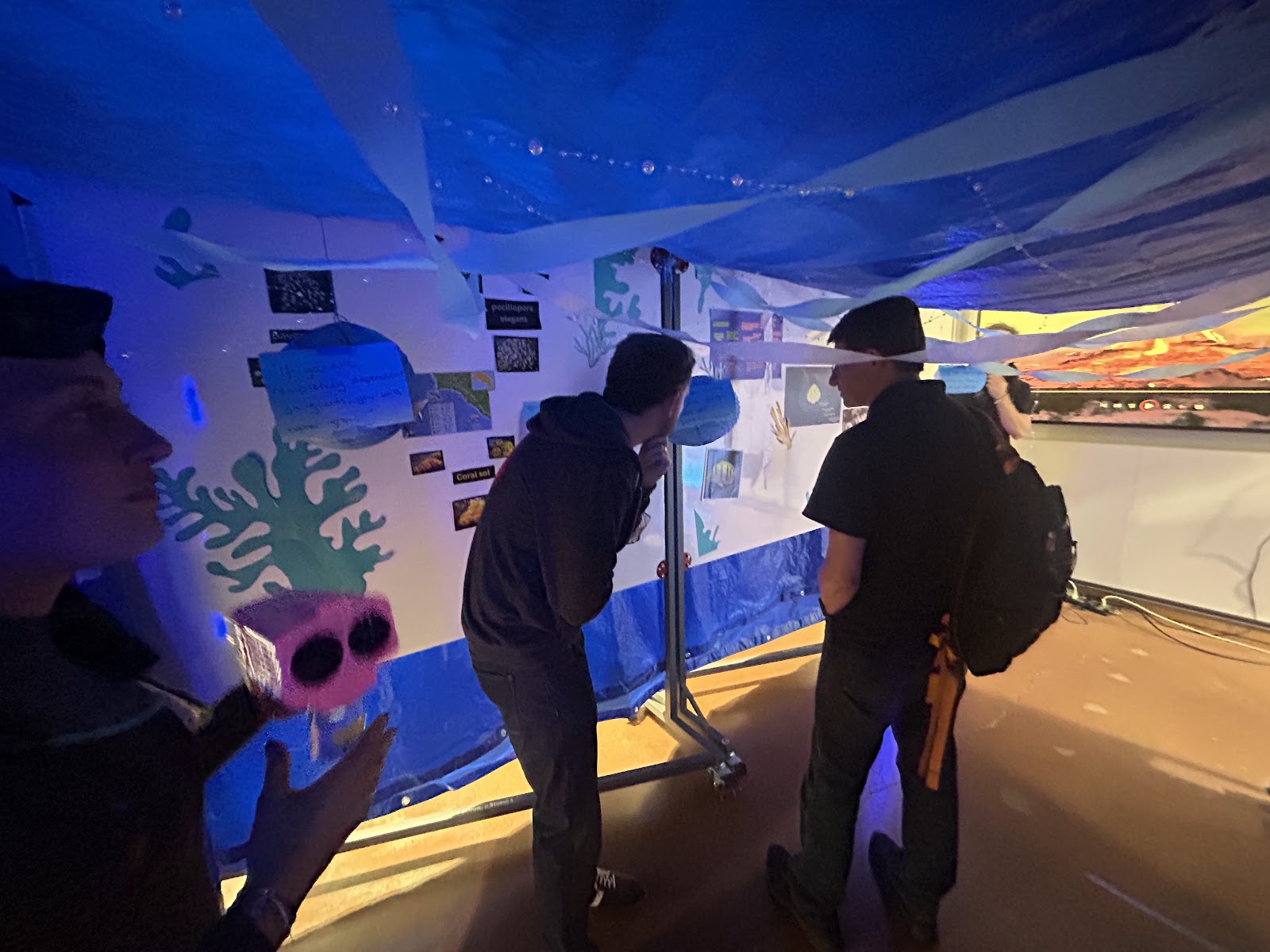
I worked across need-finding, field research, synthesis, program design, curriculum development, prototyping, and implementation planning. The project taught me that the most meaningful design solutions are often not standalone products, but systems created in collaboration with community.